Digital Traceability in Biomedical Waste Management
From barcode identification to connected operational records
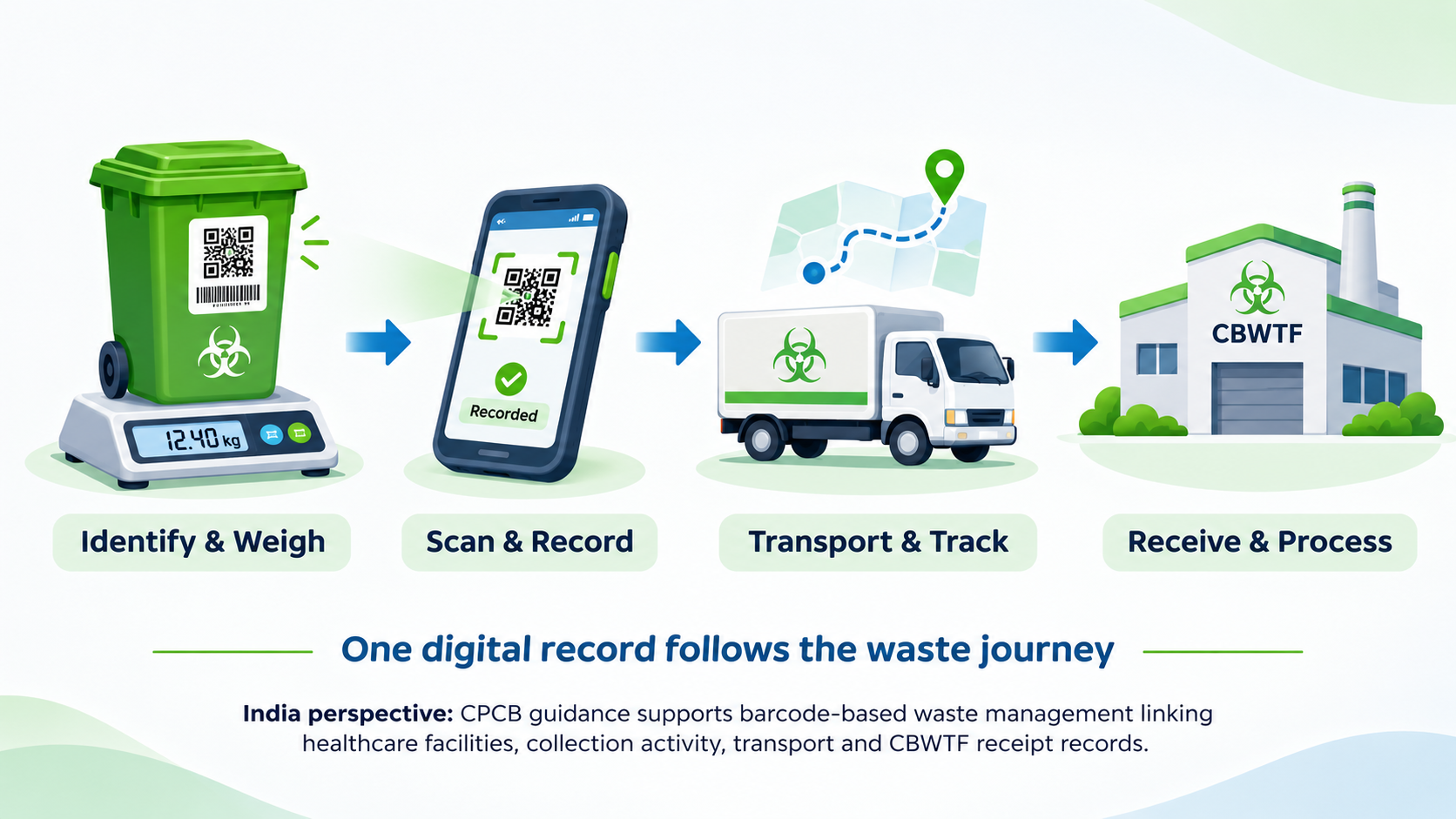
Digital traceability is increasingly becoming part of how biomedical waste is identified, collected, transported, received and reported.
Digital traceability for medical waste connects identification, collection, transport, receipt and treatment events into one continuous operational record.
How Digital Traceability Is Evolving
Unique Waste Identification
Barcode or QR identification gives each waste bag or container a persistent digital reference that can follow it through the operational lifecycle.
Event-Based Data Capture
Weight, category, user, timestamp and location can be captured at the point where important operational events occur.
Connected Chain of Custody
Generation, collection, vehicle movement, handover and treatment-facility receipt can be linked into one continuous waste history.
Digital Reconciliation
Collection and facility-receipt records can be compared to identify missing scans, quantity differences and other operational exceptions.
Connected Reporting
Operational records can feed dashboards, compliance reporting and regulator-facing data systems.
What Digital Traceability Changes Operationally
Operational Area
Fragmented Process
Connected Digital Process
Waste identity
Separate labels/registers
Persistent barcode or QR-linked identity
Collection
Pickup recorded independently
Pickup linked to user, vehicle, route, time and location
Facility receipt
Separate receiving record
Receipt connected back to collection record
Exceptions
Identified manually later
Missing scans and quantity differences become visible
Reporting
Data assembled from multiple records
Operational records can feed dashboards and reports
Why This Matters
Digital traceability does more than replace paper records with electronic ones. Its value comes from connecting individual operational events so that waste movement can be reconstructed, exceptions can be identified and reporting can be based on the same underlying records used in day-to-day operations.
Digital traceability for medical waste also helps operators reconcile collection, transport and treatment records across multiple facilities and routes.
The result is greater visibility across generation, collection, transport, receipt and treatment—not simply more data.
What Digital Traceability Changes Operationally
Waste Identity
Fragmented: Separate labels/registers Connected: Persistent barcode or QR-linked identity
Collection
Fragmented: Pickup recorded independently Connected: Pickup linked to user, vehicle, route, time and location
Facility Receipt
Fragmented: Separate receiving record Connected: Receipt connected back to collection record
Exceptions
Fragmented: Identified manually later Connected: Missing scans and quantity differences become visible
Reporting
Fragmented: Data assembled from multiple records Connected: Operational records can feed dashboards and reports
Why This Matters
Digital traceability does more than replace paper records with electronic ones. Its value comes from connecting individual operational events so that waste movement can be reconstructed, exceptions can be identified and reporting can be based on the same underlying records used in day-to-day operations.
The result is greater visibility across generation, collection, transport, receipt and treatment—not simply more data.
Where Digital Traceability Still Breaks Down
Digital traceability improves visibility, but real-world operations still create exceptions. Labels fail, scans are missed, connectivity drops and records do not always reconcile automatically.
Damaged or Missing Labels
QR or barcode labels may become damaged, detached or unreadable during handling.
Connectivity Gaps
Mobile connectivity may be unavailable during collection, particularly across dispersed routes.
Missed Scans
Operational pressure can result in collection, handover or receipt events not being recorded.
Weight Recorded at Different Stages
Waste may be weighed at generation, pickup or facility receipt, creating differences that need reconciliation.
Unplanned Route or Collection Events
Collections do not always follow planned routes, schedules or assigned vehicles.
Data Without Reconciliation
Digitising individual events is not enough if collection, receipt and treatment records are never compared.
What Good Digital Traceability Requires
① Persistent Identity : Every waste item or operational entity should retain a consistent digital reference through the workflow.
② Capture at the Event : Scan, weight, time, location and user information should be recorded when the operational event actually occurs.
③Offline Resilience : Field workflows should continue when connectivity is unavailable, with records synchronized once the connection returns.
④ Exception Handling : Damaged labels, missed scans, route deviations and quantity differences need defined ways to be identified and resolved.
⑤ Reconciliation by Design : Collection, receipt and treatment records should be compared systematically so missing events and variances become visible.
Good traceability is not just about capturing more data. It is about creating reliable, connected records that continue to work when real operations deviate from the ideal process.
From Traceability to Operational Control
Digital traceability becomes valuable when identification, field events, transport, receipt and treatment records remain connected throughout the waste journey.
The objective is not simply to digitise existing paperwork, but to create reliable operational records that make exceptions visible, support reconciliation and improve day-to-day oversight.
See how EarthRon applies these principles in practice